
Simple Outdoor Living Systems That Make Your Space More Usable Every Day

Before You Start
A more usable outdoor space is rarely the result of adding more furniture, decorations, or features. In many cases, the most enjoyable patios, decks, porches, and backyard gathering areas work well because they are supported by simple systems that make the space easier to use every day.
Before investing in additional outdoor upgrades, it helps to identify the small obstacles that prevent you from using your outdoor space as often as you would like.
Ask yourself these questions:
What keeps you from spending more time outside during a typical week?
Are seating, lighting, shade, and storage located where they are actually needed?
Which outdoor activities do you enjoy most: dining, relaxing, entertaining, gardening, or something else?
Are there areas of your outdoor space that feel underused or forgotten?
Does your outdoor setup require a lot of preparation before you can enjoy it?
What small improvements would make the space more comfortable on an everyday basis?
Could a few simple systems help your outdoor space feel more welcoming throughout the year?
The best outdoor living spaces are not necessarily the largest or most expensive. They are the ones that remove barriers, encourage regular use, and make it easier to enjoy everyday moments outside. The systems below focus on practical ways to create an outdoor space that works better for the way you actually live.
Outdoor spaces often have the potential to be some of the most enjoyable areas of a home, yet they are frequently underused.
Not because they lack space—but because they lack structure.
When an outdoor area is built around simple, intentional systems, it becomes easier to step into, easier to maintain, and more naturally integrated into everyday life.
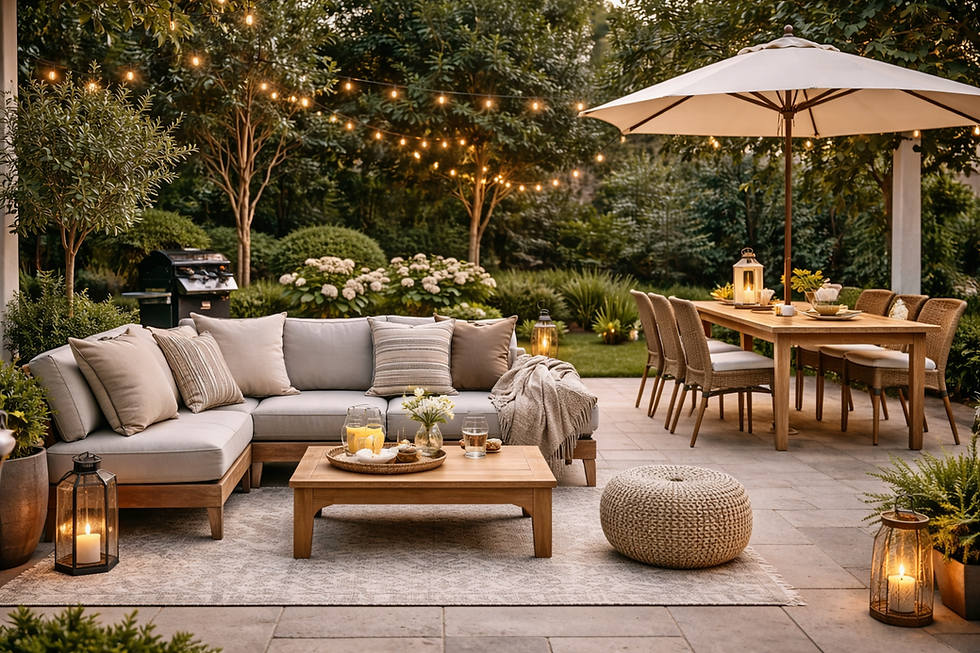
Start with a Defined Seating Area
The foundation of any outdoor space is a place to sit and stay.
A well-chosen outdoor seating set creates an immediate sense of structure. Instead of feeling like an open, undefined space, the area becomes a destination—somewhere you naturally return to.
When seating is comfortable and positioned intentionally, it encourages longer use without requiring additional effort or setup.
Create Shade That Extends Use
One of the most common limitations of outdoor spaces is exposure.
Without shade, even the most well-designed area becomes difficult to use consistently.
A simple patio umbrella or shade structure can dramatically extend how often the space is used. It creates comfort during warmer parts of the day and makes the environment feel more controlled and intentional.
Small changes in comfort often make the biggest difference in frequency of use.
Anchor the Space with Light
Lighting is one of the most overlooked elements of outdoor design, yet it has a significant impact on usability.
As the day shifts into evening, a lack of light often signals the end of time spent outside.
Adding outdoor string lights or subtle ambient lighting allows the space to remain active longer. It also changes how the space feels—creating a softer, more inviting environment that encourages you to stay.
Make Dining and Gathering Easy
Outdoor spaces become far more useful when they support simple gatherings.
A durable outdoor dining table or serving surface allows meals, drinks, and small gatherings to happen without additional setup.
The goal is not to recreate an indoor dining room—it is to make casual use feel effortless.
When the space supports gathering naturally, it gets used more often.
Keep the System Simple
It is easy to overcomplicate outdoor spaces with too many features or too many disconnected elements.
But like any system, simplicity creates consistency.
When a space includes:
a place to sit
a way to stay comfortable
lighting for extended use
a surface for gathering
…it becomes complete without needing anything more.
Design for Use, Not Just Appearance
Outdoor spaces are often designed visually first, but long-term use depends on function.
If something is difficult to move, uncomfortable to use, or requires setup every time, it becomes less likely to be used at all.
Each element should support ease:
seating should be ready
shade should be effortless
lighting should require minimal effort
When these conditions are met, the space begins to feel like a natural extension of the home.
A Space That Becomes Part of Daily Life
The goal of an outdoor system is not occasional use—it is regular use.
When the space is easy to step into and easy to maintain, it becomes part of everyday routines:
morning coffee
evening unwinding
casual meals
time with others
This is what transforms an outdoor area from something you have into something you use.
Final Thought
An outdoor space does not need to be elaborate to be effective.
When it is built around simple, functional systems, it becomes more comfortable, more usable, and more consistent over time.
And ultimately, that is what allows it to become a meaningful part of daily life.


